
The last couple of weeks have been quite active at Savera Farm's 'goat-osphere'! A few weeks ago, over a span of 2 days, we were glad to welcome 3 deliveries resulting in 4 kids. All the kids were around 3-4 kgs and the delivery process was fairly smooth. Fairly smooth, since we were largely uninvolved - which is not necessarily a good thing. Over time, we would like to better develop our processes to predict and better manage deliveries. With that said, Tellacherry kids unlike Kanni are lactating well which is a huge relief since we had to manually nurture and feed the earlier Kanni kids for several weeks.
A day after the birth, the kids were on their feet and a few
days later, they were strong and confident enough to hop around the cell. For several weeks after birth the does and kids will remain separated from the main herd.
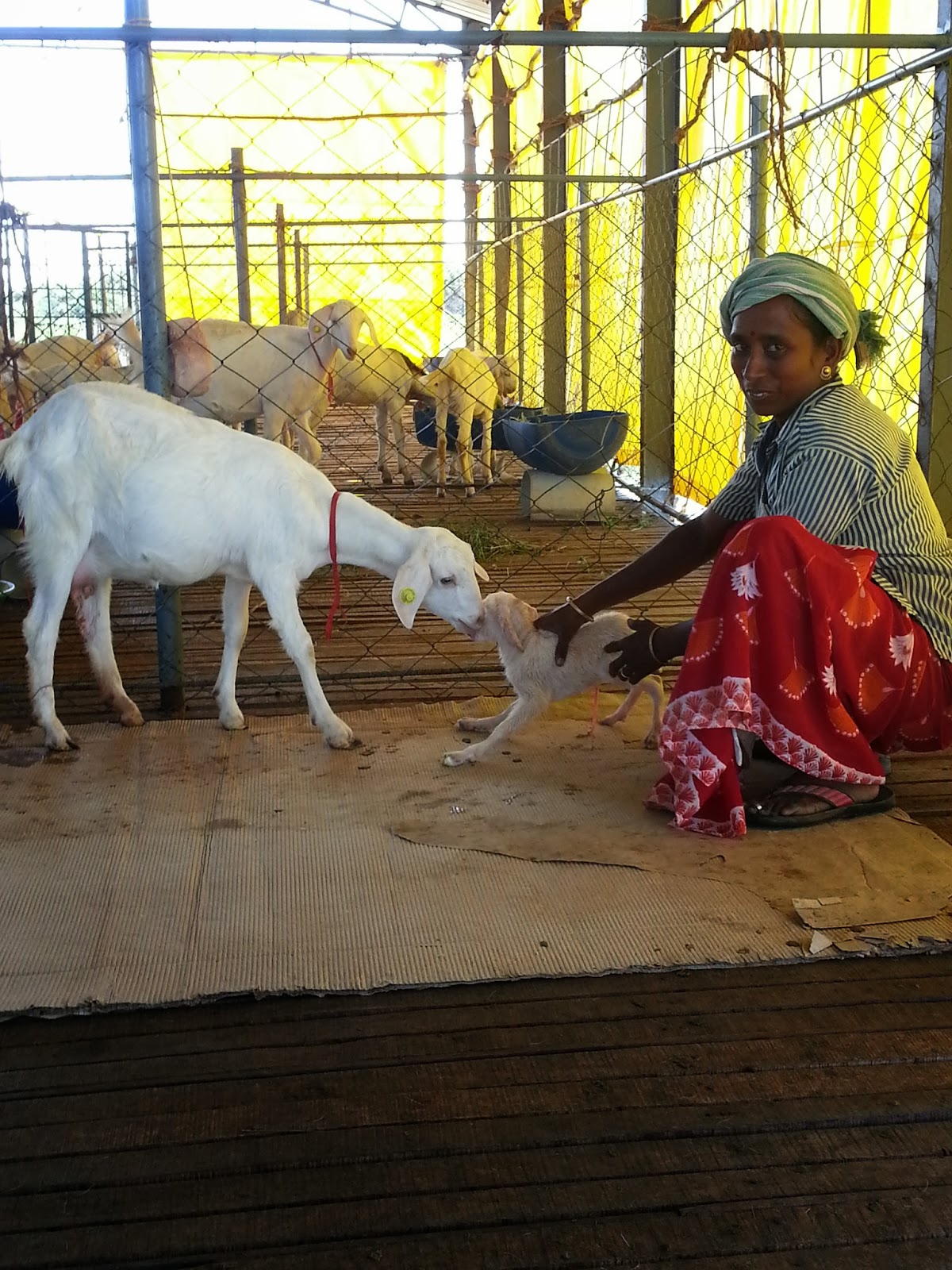
Some kids have to be guided initially before they identify with their mothers.

While other kids get to business right away. Feeding time!

Post delivery, kids need to be cleaned and inspected

Our first set of twins, hoping for several more!

In an hour or two, the newborns start to settle down and the does can become quite protective
With the kiddings steadily becoming the norm at Savera Farms, our foray into goat rearing is steadily moving to the next level. While we are encouraged the flock is increasing, it also comes with added awareness and responsibility. As we acquire experience and develop the needed skills, we constantly work with more experienced operations for advice and best practices. At the moment, we are trying to understand how larger herd operators manage simultaneous kidding of 200-250 does. Feel free to share your advice and readings.
Here are a couple of key metrics we found helpful :
Parameters
|
Range
|
Notes
|
Temperature
|
102.5 - 104
|
Depends on
ambient temperature
|
Pulse rate
|
70 - 80
|
Beats per
minute
|
Respiration
|
15 to 30
|
Per minute
|
Stomach movements
|
1 - 1.5
|
Per minute
|
Puberty
|
7 weeks - 8
months
|
Separate
bucks from does at 2 month
|
Stomach movements
|
1 - 1.5
|
Per minute
|
Estrus/Heat Cycle
|
17 to 23
|
Days
|
Gestation
|
143 to 155
|
Days
|
Life span :
|
||
Does
|
11-12 years
|
Often death
in does is kidding related
|
Bucks
|
8-10 years
|
|
Productive kidding
|
8-10 years
|
For Does
|
Full growth size
|
At 30-33
months
|
Most keep
growing until year 3
|
With the kiddings steadily becoming the norm at Savera Farms, our foray into goat rearing is steadily moving to the next level. While we are encouraged the flock is increasing, it also comes with added awareness and responsibility. As we acquire experience and develop the needed skills, we constantly work with more experienced operations for advice and best practices. At the moment, we are trying to understand how larger herd operators manage simultaneous kidding of 200-250 does. Feel free to share your advice and readings.


